From Point Blue Conservation Science (formerly PRBO) on the Farallon National Wildlife Refuge.
An account of the trials and tribulations of conducting ecological fieldwork on a small, rocky island 28 miles west of San Francisco (37.7 N, 120 W)
The Fall Crew arrived on Southeast Farallon Island on 16
August to find two adult Blue-footed Boobies, an adult Brown Booby, and the
continuing adult Northern Gannet, all on Sugarloaf and right above where we
conducted the switchover with the Seabird Crew. Three species of birds from the
family Sulidae at one location in California is highly unusual, since none of
these species breed in the state. Thankfully, this was to be an auspicious
start to a bountiful August and September.
Over the past several years, the weather during late summer
(Aug-Sep) has been mostly foggy or windy, with just occasional light winds and
high overcast days that are conducive to allowing migrants to the find the
island. This year, however, was quite the opposite, with fog noted for brief
periods on only 7 days, and winds stronger than 10 knots on only 10 days, and
never stronger than 20 knots.
Our first surprise of the fall occurred on just our third
day on the island, when an adult male Painted Bunting showed up outside of our
kitchen window during breakfast time. Although we have seen several Painted
Buntings over the past decade, this is the first adult male that has ever showed
up on the island. Numbers of western migrants began increasing a few days
later, including Baird’s and Least Sandpipers, Yellow, Hermit, Wilson’s, MacGillivray’s,
and Black-throated Gray Warblers, Chipping and Savannah Sparrows, and Lazuli
Buntings. A few highlights from late August included our 12th record of
Virginia Rail, three Least Flycatchers, our 17th fall record of Gray
Flycatcher, our 51st record of Blue-gray Gnatcatcher, 74th
record of White-tailed Kite, a Northern Waterthrush, an American Redstart, a
Baltimore Oriole, and an Orchard Oriole.
The weather throughout early September was even more
conducive to migration – high overcast skies and very light winds nearly every
day – resulted in still greater numbers and more diversity. Yellow Warblers and
Townsend’s Warblers were most abundant, especially compared to recent years,
with 54 and 40 arrivals respectively. Highlights from this period included our
36th record of Green Heron, a flock of four White-faced Ibis (just
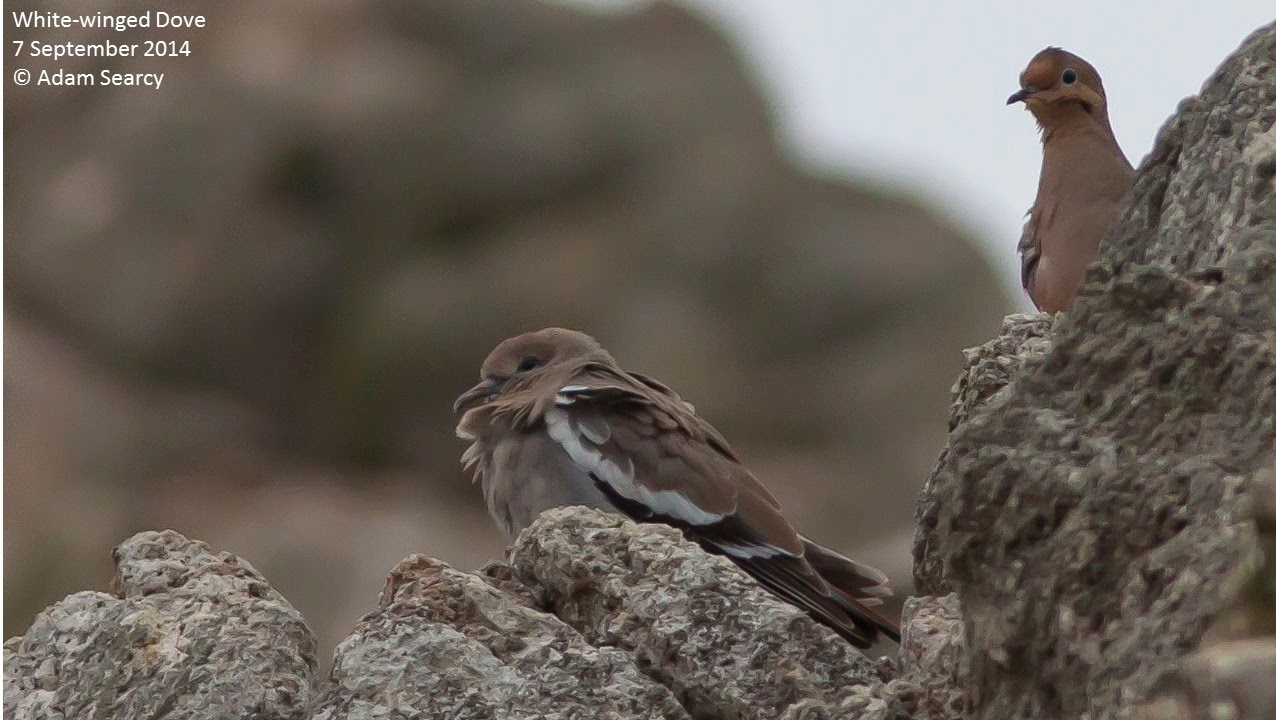
the 3rd occurrence of this species at the Farallones), our 28th
record of White-winged Dove, our 46th Chimney Swift, our 22nd
and 23rd Acorn Woodpeckers, possibly our 4th Alder
Flycatcher (DNA analysis will be required to separate it from eastern Willow
Flycatcher - until then, it is considered a Traill's Flycatcher), our 11th Yellow-bellied Flycatcher, 69th Mourning
Warbler, 77th Bay-breasted Warbler, 70th Prairie Warbler,
and an adult male Indigo Bunting (rare plumage for fall). A short lull in bird
migration occurred during mid-month. This may have been due to the excellent
visibility, which allows birds to see the mainland, where food and shelter are
more plentiful.
Recently on the island we celebrated Farallon Biologist Pete
Warzybok’s 1800th night on South East Farallon Island. That’s nearly
5 years of Pete’s life spent living, sleeping and working on the island!
5 years on the island - long enough for Pete to have seen pretty much everything...
To celebrate this momentous occasion, we managed to squeeze
in a pancake breakfast before heading out for our morning visit to the common
murre study plots.
The interns had also secretly constructed an award worthy of
such a day, capturing the essence of Pete’s commitment to the birds on the
island: a personalized gull stake (usually used to mark Western Gull study
nests) complete with commemorative plaque and feathered Western Gull artwork.
This was hidden in the weather station box outside the house, where Pete, still
bleary-eyed, checks the temperature at 7am every day. Surprise!!
Pete's award
Craftsmanship worthy of the milestone.
Pete with his personalised gull stake award.
2014 is Pete’s 14th season on the island. We put
Pete’s memory to the test and asked him about his time on the island over the
past 14 years - the birds, the weather, the places, the food, the funny. Here’s
what we learnt!
What struck you about
the place in your first season (as an intern in 2000)?
The abundance of life - there’s so much going on and you’re
right in the middle of it.
Favorite species?
Like all good parents, Pete’s answer was non-committal. “I
love them all, differently, at different times”. Hmmm…..come on Pete - all
parents secretly have a favorite…admit it.
Pete did later admit that he had a favorite chick – he couldn’t
go past the common murre chicks with their frost-tipped down.
Common murre chick
Favorite spot on the
island?
The murre blind, high on Shubrick Point, where Pete has
spent approximately 1800 mornings watching the breeding murres below the blind.
As well as the great view across the murre colony to Fertilizer Flat, Arch Rock
and Sugarloaf, on clear days the views up the coast of Marin County to Point
Reyes and beyond are spectacular.
The murre blind, and view from Shubrick Point.
Funniest visitor?
Huell Howser, who filmed an episode of California’s Gold on
the Farallon Islands. As you can imagine, Huell had plenty to be amazed about
during his visit - count the “wow”s in this short clip from the episode.
Best island cook?
Ed Ueber, who was a gourmet chef as well as the Head of the
Gulf of the Farallones Sanctuary at the time. He’d arrive on the island, head
straight to the kitchen and throw a loaf of bread in the oven. He loved cooking
for people so much he’d cook every night he was on the island (normally, the
island’s residents take turns cooking for the whole team). One of Pete’s best
meals on the island was Ed doing amazing things with duck, and duck fat (as
Pete recalled this festival of duck, a Homer-esque glaze came over his face).
Worst meal on the
island?
One head of cauliflower with brown sauce. This was served up
by an intern as dinner. With no accompaniments.
Cauliflower - needs more than just brown sauce to make a meal.
Funniest experience?
Judging a yo-yo competition (while wearing a gull hat, complete
with wings) which included a 90 second free program to music. The interns were
competing for a mystery prize, which turned out to be worth their hours of
rehearsal - a signed David Attenborough photo.
A close second was spontaneous post-cormorant-banding
parties, when the participants (more than mildly hysterical, having had no
sleep, still crawling with lice, waiting for a shower, having a beverage while
waiting for the shower) suddenly get the music going and ta-da, party time at
7am!
Wildest weather
experience?
60 knot winds and 20 foot seas in a late winter storm. Waves
were washing over Saddle Rock and the crane at East Landing. Pete went down to
East Landing to tie the boat down as he was worried about it washing away. He
had to hide behind one of the thruster boxes (which house the winches for the
crane) to avoid a wave. Note: in normal conditions these boxes are 20m or so
from any water (and about 8m above sea level).
If you were going to
be reincarnated as one of the species on the island, which would it be?
Pigeon guillemot, because they look as though they are
having the most fun.
Pigeon guillemots are very social birds, and we enjoy them
gathering to sing and squabble and cavort on the breeze (the windier the
better!) around the blinds in the mornings, flashing their bright red feet and
gapes.
Pigeon guillemot
So thanks Pete for all your work on the island, from the
birds, pinnipeds, salamanders and all the island’s species (even the interns).
Happy 1800th!
It’s happening. All over the island chicks are busting free
from their shells after weeks of incubation. In order to provision these new balls
of down during the brooding phase, parent birds have begun the task of
collecting prey from the ocean, or in the case of the western gulls, from
regional dumps and local supermarkets back on the mainland. Scott Shaffer, a
researcher with San Jose State University, and his grad student Emma Kelsey
recently deployed GPS tags on several birds out here on SEFI, in an effort to
provide insights into the foraging ranges of individual birds. Gulls are
professional opportunists. We’ve watched them regurgitate a wide range of prey
from fish and squid, eggs and chicks from neighboring nests, to chicken breasts
and plastic action figures. As you can see from the tracks below, foraging
patterns vary widely amongst individuals; some apparently prefer the bounties
of the continental shelf break while others prefer the bounties of the city.
Once a successful foraging trip has been made, different
species of birds have adopted different strategies for food delivery. In
response researchers have developed various approaches to determine what
exactly parent birds are feeding their young. Western gulls for example barf up
ingested prey to their chicks, which from a distance has the appearance of,
well, barf. Thus a barf sample collected from a parent bird is necessary to key
out individual prey items. This same technique is also used for determining
Cassin’s auklet and cormorant diet. Birds like common murres or pigeon guillemots
require a far less messy approach. These two species of Alcids bring back a
single fish or invertebrate to their awaiting chick after each foraging bout.
Parent birds will fly in from the sea carrying prey items in their bill,
visible enough to be identified with binoculars from a distance. Other Alcids,
such as rhinoceros auklets, delivery food only after the sun sets when visual
observation is impossible. These birds have to be netted at dusk to obtain
samples of fish they bring in. Rhinoceros auklets carry multiple fish of
varying species in a single bill load back to their chicks, some samples with
as many as 10 prey items.
The gang from 2012 during a pigeon guillemot diet watch.
Energetically, not all prey sources are equal. Young of the
year salmon, for example, are far more beneficial to a growing fluff ball than
Pacific Saury. Though at times rather invasive, determining what chicks are
eating out here is crucial for understanding the overall health and status of
seabird populations on the Farallones, as well as the overall health of the
ocean where these birds forage and make a living. Seabirds are excellent
indicators of changing oceanic conditions, during a time when our oceans are
experiencing change at an unprecedented rate.
Measuring salmon brought in by a rhinoceros auklet, with bags of Cassin's auklet barf samples (mostly krill) on the left.
Thanks to modern technology those of us living out here on
this isolated rock are surprisingly well connected to the mainland. Internet
beamed 26 miles across the Gulf of the Farallones from San Francisco provide us
with access to phone, email, news, weather, entertainment, and even a handy web
cam perched atop Lighthouse Hill. So long as the lichen layer on the dishes are
kept in check and the gulls don’t block the signal we can keep in touch with
family and friends with the click of a mouse. In the nascent years of those who
first occupied the Farallones however, communication with shore required
significantly more effort than simply opening a web browser.
With the discovery of Californian Gold in 1849, San Francisco
was transformed from a sleepy fishing port to a major hub for vessels flooding
into the region from all over the world hoping. Hundreds of ships carrying
thousands of men were tasked with navigating the many hazards that guard the
entrance to San Francisco Bay, specifically the Farallon Islands to the west. Without
modern GPS, radar, or navigational aids, these vulnerable vessels were
literally sailing blind at night. The solution, lighthouses, a series of them
erected all along the west coast during the mid-1800.
The Farallon Light and its subsequent living quarters were
completed in 1853, and became operational with the installment of a first order
Fresnel lens in 1854. Lighthouses were anything but automated back then.
Lighthouse keepers who lived on the island with their families worked in three
hour shifts to ignite, monitor, and extinguish the oil lamp, clean soot off the
magnifying prisms, maintain working order of the weight and gears that rotated
the lens, and above all guard government property from the irritable and often mal
tempered ‘eggers’ who cohabitated the island at the time.
Unlike other stations along the mainland, working the
Farallon Light had the potential for a rather lonely existence for some.
`Written letters were the only form of communication available on island at the
time; and with infrequent visits by boat together with a difficult landing,
news from home arrived few and far between. The following is letter from a
former lighthouse keeper to his brother in 1858, providing a glimpse into what
life was like back then.
Farallones Light House
Aug. 15th 1858
Dear Brother Horace,
Your letter of July 1st
was sent out to me a few days ago by Sodowick and I can assure you I was glad
to hear from you, as I always am to hear from home.
Since I wrote you last I have been to town
spending the Fourth with Sod. and setting up the accounts of the Light House
for the last fiscal year. The late keeper was a very ignorant man and the
accounts were all hurly burly but they are straight now, and correct up to the
close of the fiscal year (30th June). We have been having beautiful
weather (for the Farallones) for several days past… We are considerably
bothered about getting news here as it is very difficult to land. The Island as
you are perhaps aware is a high, rugged, and barren mass of rocks in the open
ocean. There are but two places where you can land at all, and then only with a
small boat in smooth weather. There has never been regular communication with
the city except by the boat which brings out our provisions once in 3 months,
and the reason has been that the late keeper in the first place could hardly
write an intelligible letter, and furthermore if he asked for anything more
than the regular supply of oil etc. for the light, he was afraid he would be
blamed for being too expensive, but the case is exactly the opposite…Maj. B.
told me that he took a great interest in our light etc. (as it is the best and
most important on the whole Pacific coast and also the most isolated) and would
do all in his power to make us as comfortable as possible, so I hope in future
we shall not be bothered so much about getting our letters.
My eyes have not got well yet, but
they are much better and I hope they will not plague me much longer. I do not
think it is from hereditary causes, and am inclined to believe it is caused
partially, if not wholly, from an impure state of the blood. I am now taking
some syrup for my blood (which I know is impure) and also using Thompson’s Eye
Water. I reduce it one-half and put a few drops in my eyes every night when I
go to bed, and it has helped me much, but I expect one great reason why yours
are so much inflamed, is looking at the “female form divine”. I presume my eyes
would be worse than they are now if I could be at home this winter and go to a
few parties and school exhibitions. A great trouble for us, are they not, these
women…
Give my love to all the family,
and particularly to little Lydia, and believe me, as ever,
Your
affectionate brother
Amos
Despite our easy access to the digital world, there’s still something
special about receiving a hand written letter or care package from a loved one
back home. So thanks to everyone who has sent us letters in the past, and
please keep them coming.